
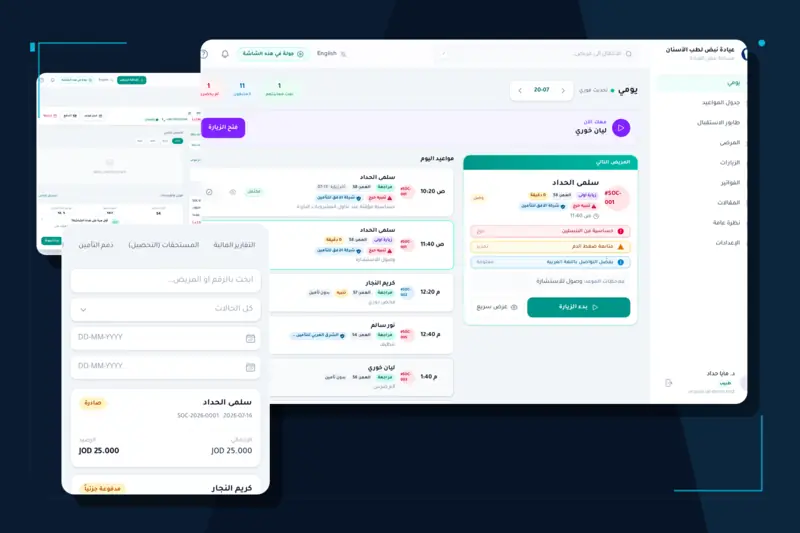
Clinics & medical centers in Jordan
The challenge
Small and mid-size clinics in Jordan were caught between paper records, costly SMS, and expensive foreign systems that did not fit the reception-and-clinician day. The practical problem was not a shortage of screens; appointment data was disconnected from the patient chart and then entered again for billing. This case study records how booking, reminders, medical records, and electronic invoicing were brought into one path without forcing patients into a heavy app or assuming expensive clinic hardware. Scope began with what had to work on the first operating day: configure services and clinicians, create a clear booking, send a pre-visit reminder, open the chart for the clinician, and issue the invoice from the same session. Additions that did not protect that path waited until usage stabilized in real clinics.
This case study records how BarmajTek built Arabic-first clinic management and operates it in live Jordanian clinics. A multi-tenant architecture and per-clinic data isolation sit behind Vue and Inertia interfaces, Laravel services, and PostgreSQL. In operation, automatic reminders are scheduled 24 hours before visits, the digital chart displays color-coded allergy alerts, insurance co-pay is handled in billing, and electronic invoices are ready for national e-invoicing paths. Interfaces were tested on real devices and weak networks, with daily backups and export on request included in operations. These are facts about delivered capabilities and current operation; the case study does not claim an undocumented improvement percentage or financial return. From here, open the ready clinic product scope or SaaS development when the rules go beyond a ready clinic system.
See booking, patient records, billing and current prices on the Clinic Tek clinic management system website.