
Our work
Working products, not presentation promises
Working products, not presentation promises: we build and operate SaaS products for active businesses. Our case studies explain the problem, the decision, and what changed after launch — evidence from systems operating today.
Our work
Evidence from systems operating today
Our work covers SaaS systems operating in real environments, beginning with Clinic Tek. Each case explains the operational problem, the decisions we made, and what changed after launch. We also state context and boundaries rather than presenting the result as a template every project can copy. The aim is to show what may transfer to your situation and what needs fresh validation.
The studies show how we scope a multi-tenant platform, field application, or electronic invoicing integration, then divide delivery into stages and plan support. They connect technical choices to the daily user, such as synchronization for a field team or permissions in a clinic record. We distinguish software changes from work that required training or an internal process adjustment. Constraints affecting priority are also stated because a solution cannot be understood apart from the available time, data, and users. You see the method behind the result, not only an interface screenshot.
Start with the Clinic Tek case to see how an Arabic clinic day becomes a digital workflow from reception through the record and invoice. Notice how user roles were separated and how connectivity and data requirements shaped the design. Read the challenge, then compare the approach with constraints and outcomes to understand the reason behind each decision. Note similarities and differences with your operation, especially team size, integrations, and responsibility for data entry. If your sector matches a Tek product, open its page and book a demo. If your needs differ, review custom development and send the problem you want solved.
Operations leads can review the challenge and outcomes while technical reviewers examine architecture and integrations. Procurement can use the scope and schedule to understand what delivery includes and what remains the customer's responsibility. Each case then becomes a shared reference before a demo or scoping call. We state what existed, what we built, and what can be measured without adding success rates or promises we cannot substantiate. When no measured result is available, we describe the operating change without inventing a figure.
Clinic Tek is the clearest example because our team builds, operates, and supports it. The product exercises our experience in multi-tenant SaaS, Arabic interfaces, electronic invoicing, and changing network conditions. It also confirms that a successful system needs training, careful data handling, and an understandable support path, not good technology alone. Post-launch feedback is reviewed and prioritized by impact rather than turning every request into an immediate feature. That experience informs Tek products and custom work while each engagement keeps its own scope.
When evaluating BarmajTek, look for three things: written scope before development, delivery your team can test in stages, and clear responsibility after launch. Prepare a description of the current work and its users, the most important failure you want to prevent, and any essential integration. Identify the data that must move and the person approving the result because both affect delivery planning. Then choose the right next step: a ready-product demo, a focused service, or a brief for a new project. We use the first conversation to confirm fit before recommending a path.
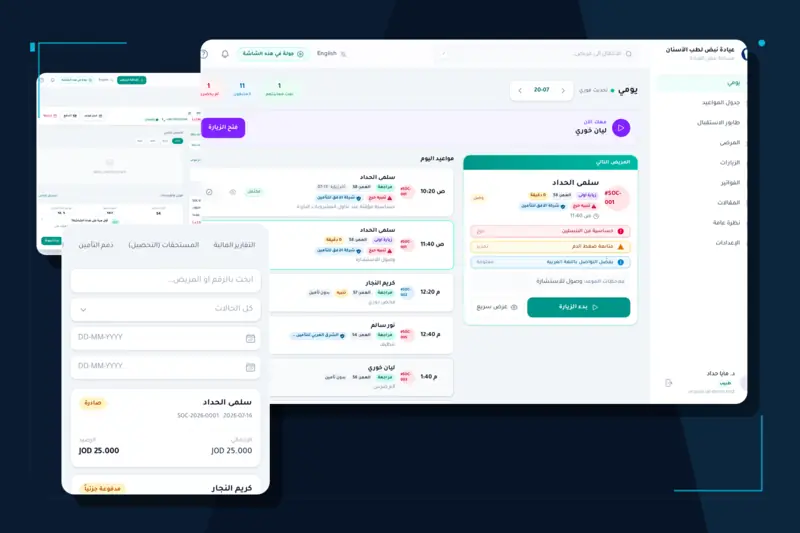
01Clinics & medical centers in Jordan
Digital clinic operations case study
Evidence from live Jordan clinics: Arabic-first operations built and run by BarmajTek.
Laravel · Vue · Inertia · Flutter · PostgreSQL
Open the Clinic Tek case study
Have a product that needs building?
Tell us which operating problem you want to solve. We’ll review your needs to discuss a suitable product or custom build.