
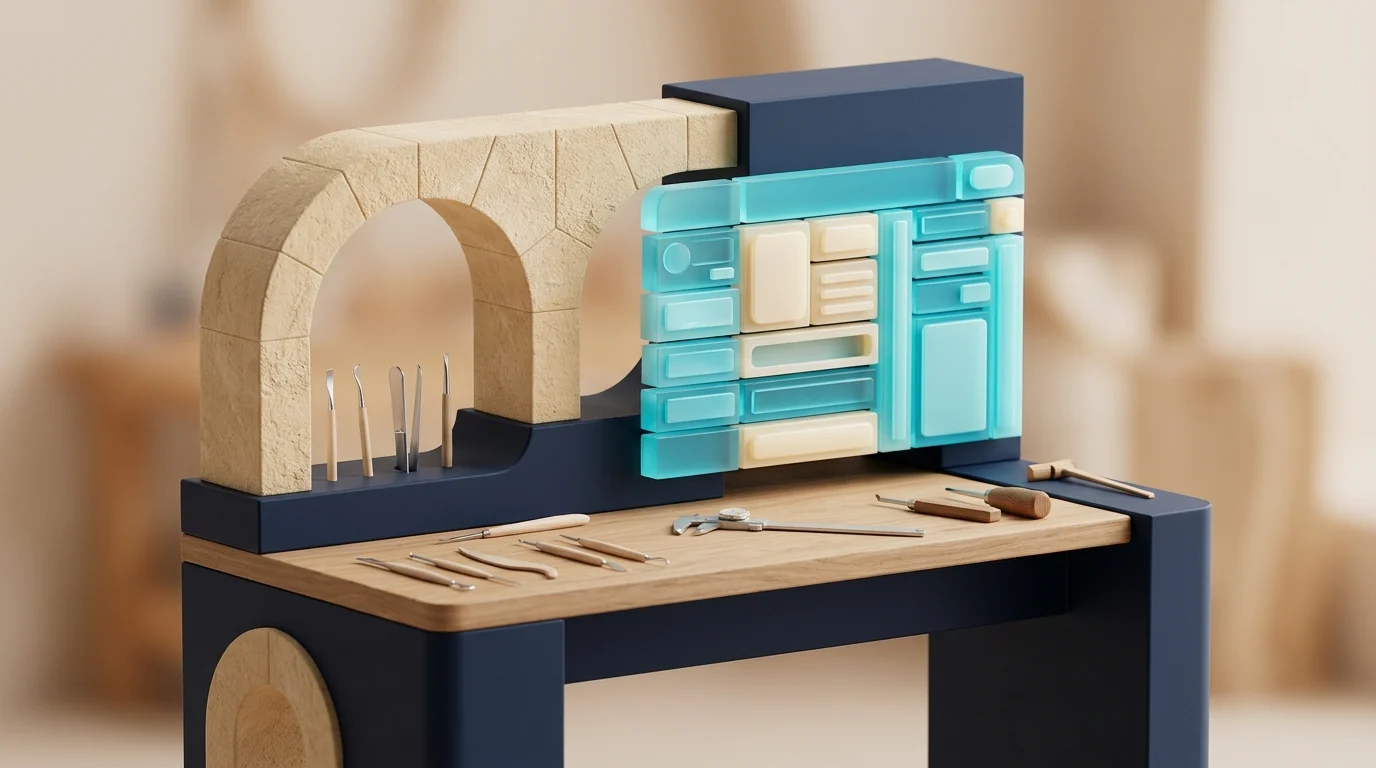
BarmajTek’s Arabic-first approach begins with a practical observation: adding translated strings at the end does not fix a product conceived around another direction, vocabulary, and operating context. Arabic changes layout, mixed text, form behavior, data models, search content, and the words real teams use to describe their work. Starting with Arabic does not make English second-class. It brings both languages into discovery, engineering, content review, and testing before assumptions harden into components and databases.
The name is a working reminder
BarmajTek combines an Arabic expression of programming with technology. The name does not prove product quality, but it keeps the purpose visible: users should not have to mentally translate their work to operate professional software. The claim must appear in testable details—clear native copy, stable direction, accessible components, portable data, honest feature boundaries, and workflows observed with the people who perform them.
Discover workflow in its own language
Ask who creates, approves, corrects, and relies on each record; which exceptions occur; and what staff call them. A clinic, restaurant, education center, and field team should not be forced into a foreign template merely because its labels were translated. The RTL-first design guide covers component engineering. The custom software versus SaaS guide helps decide when a ready product fits and when a distinct workflow justifies tailored work.
Write native content
Literal translation can preserve an unnatural sentence order or choose a term nobody uses at work. Write each locale as complete content with its audience and action. Keep terminology consistent within the product and give reviewers context. Test long and short labels, Arabic names, numbers, currency, phone numbers, English brands inside Arabic sentences, validation, and empty states. Search titles and descriptions also need native intent rather than a translated heading.
Make RTL a component contract
Use logical properties for spacing and alignment, define which directional icons mirror, and preserve symbols whose meaning stays fixed. Test DOM order, focus, keyboard operation, screen readers, and text zoom in both directions. Do not create a permanent second stylesheet of overrides. Shared tokens and components become stronger when direction behavior is explicit. Arabic-first means the component is designed with RTL evidence, not patched after an LTR release.
Reflect language in data architecture
Content may have two native versions, one available locale, or language-sensitive fields. Do not assume English is the permanent source. Store locale and direction where required, preserve Unicode through import and export, and test search and sorting. Keep public locale in the URL so a shared link remains stable. Avoid session-only language changes that make crawlers and recipients see a different page than the sender intended.
Keep one product system
Native experiences do not require two disconnected products. Business rules, design tokens, permissions, components, and quality controls remain shared. Copy, direction, formatting, and workflow details adapt deliberately. Review links so an English reader reaches final English routes and an Arabic reader stays in Arabic. Explain when content exists in one language rather than publishing a poor automatic version or misleading alternate.
Pair localization with engineering quality
Arabic support cannot compensate for weak authorization, backup, synchronization, performance, or audit. A polished screen does not prove a failed provider call is safe. We test normal and exceptional paths, use synthetic data in demonstrations, and state which features depend on connectivity, configuration, or an external provider. We separate hypotheses from measured outcomes and avoid invented statistics or customer stories.
Offer ready and tailored paths
Some businesses have standard workflows served well by a maintained SaaS product. Others have rules or integrations central to their advantage. Supporting both paths makes fit the first question. Do not rebuild commodity capability merely to enlarge a project, and do not force a differentiating process into permanent spreadsheets around a generic product. Document ownership, maintenance, portability, and release responsibility in either choice.
Build trust through limits and ownership
Describe reviewed functionality, current integration boundaries, and data responsibilities precisely. Regulatory specifications and provider capabilities change. A demo should include permission denial, timeout, duplicate operation, and export—not only the ideal screen. Customer data needs individual access, retention, backup, and usable export. When evidence is not yet available, frame an outcome as something to test rather than an automatic benefit.
Learn from operation
Real work reveals mixed-direction text, slow networks, copied QR codes, delayed callbacks, and role confusion. Observe those cases, run automated and manual quality checks, and prioritize blockers over decoration. Maintain content and product decisions as reviewed assets. Arabic-first is not a launch milestone completed by adding dir; it is a continuous discipline across discovery, implementation, support, and editorial work.
Conclusion: design from context
BarmajTek’s Arabic-first position means language, direction, workflow, and data rights enter the first decision while English receives equal deliberate craft. Explore BarmajTek’s bilingual product portfolio, then ask for a demonstration of one real workflow in both directions, including failure and recovery, rather than accepting the phrase as a brand slogan.